


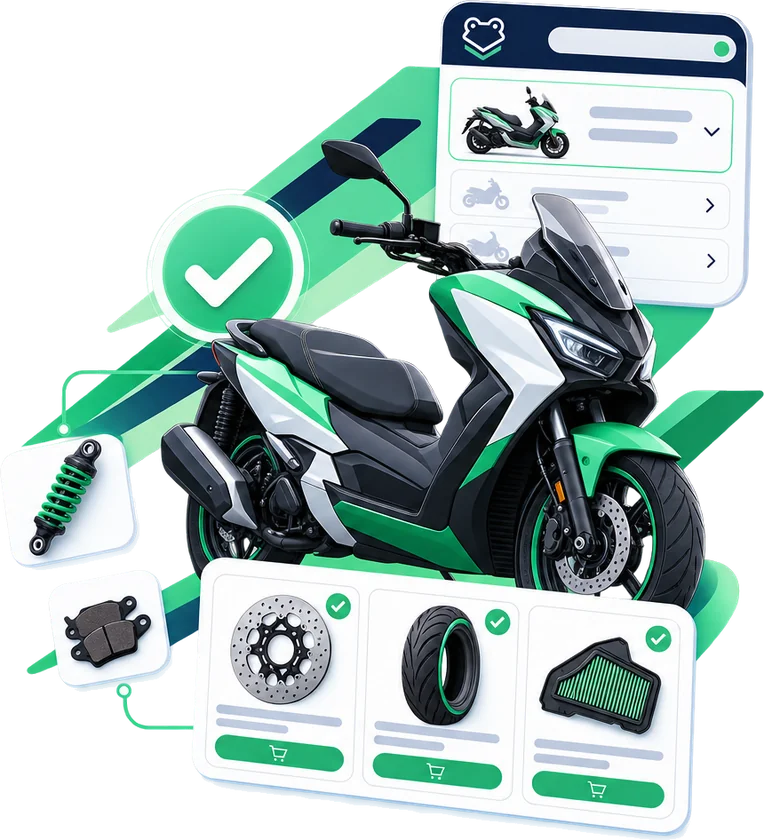
Check part compatibility with a vehicle in Shopware
Help customers check a part for their vehicle. Vehiculier connects vehicle selection to the catalogue, search and product page, then retains this context on the relevant purchase lines.
Choose a vehicle before browsing parts
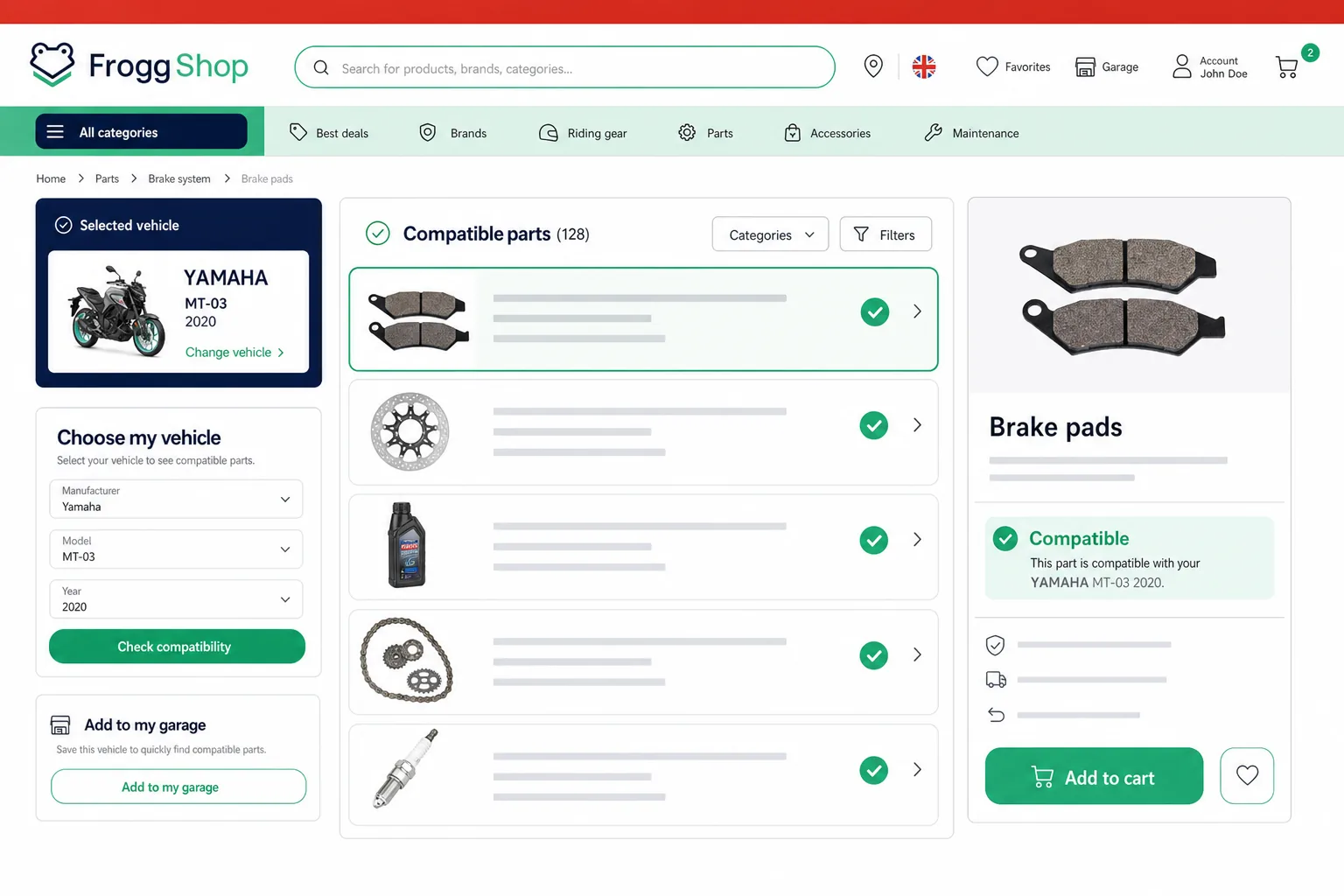
The customer selects a make, year and model. The confirmed vehicle becomes the active browsing context; listings and searches can then be limited to compatible items.
The product page displays the available compatibility result and compatible models. A universal product must be explicitly declared as such: the absence of a vehicle–product relationship is not enough to establish compatibility.
Keep the current selection separate from the garage
The active vehicle is used for the current browsing session. Adding it to the garage is a separate, explicit action. From their account, customers can find saved vehicles, activate the one they want to use or remove it from the garage.

Retain the vehicle associated with each purchase
When a product is added to the basket, vehicle information is saved for that line. Several vehicles can therefore coexist in the same basket. Changing the active selection does not replace information already captured for those lines.
When the order is created, the information is retained for the confirmation and order details. It describes the purchase context independently of subsequent changes to the garage.

Provide catalogue entry points by vehicle
Pages for vehicle makes, models and models by category support catalogue discovery. Text and URL segments can be adapted to the project’s vehicle family.
The hierarchy follows the order make, year, model. A fully configurable multi-level structure or publication of these pages in an external content management system requires a separate assessment.
Validate the reference data and relevant journeys
The quality of product–vehicle relationships, universal product rules and enabled channels must be defined before publication. The current scope limits listings to 5,000 distinct items per vehicle or model context; actual volumes must be validated.
The data retrieval service and context-specific cache require suitable configuration. If the service is unavailable, a result must not be presented as confirmed compatibility; previously captured information remains retained.

What is the scope of your project?
Tell us about your needs and the tools you use. We can clarify the possibilities, conditions, alternatives and scope of work suited to your project.
Discuss your needs